


Plant Maintenance Strategies for Inaccessible Office Areas
Views: 1,988Share This:


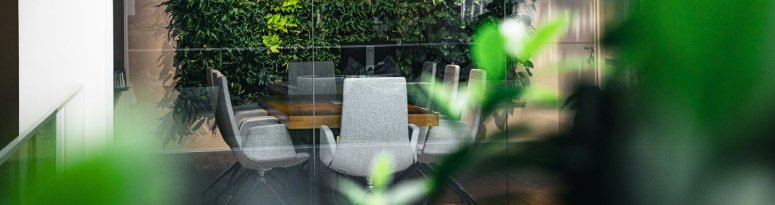
In the interiorscape business, one of the most frustrating issues is the inability to access areas where plants need servicing. Conference rooms and executive offices are often booked throughout the day, leaving little opportunity for routine plant care. Should you spend valuable time making a return trip? Do you trust someone else to water the plants when the room is open, even though there’s the risk of overwatering, plant shock, or pest infestations? For interiorscape companies, inconsistent access doesn’t just affect plant health—it disrupts route efficiency, technician productivity, and overall service consistency. It’s a tricky situation, but here are a few strategies to handle inaccessible office areas.
Plan Service Visits Around Access
I service one particular building where the challenge of plant maintenance is significant—the conference room is always occupied, and the CEO is either meeting with someone or on a call in his office. But I realized that both rooms are consistently open for servicing during lunch. This discovery has reduced both time and frustration while also preventing costly plant replacements due to inconsistent care. If servicing during lunch isn’t feasible for my team or me, I take a proactive approach and reach out to the office manager before the next service day to schedule a specific time slot when the rooms will be accessible.
If you encounter plant access issues, pay attention to when rooms are open during your service days to identify the best times for maintenance. A small adjustment in timing can protect plant health while keeping your maintenance route efficient, ensuring your work can be conducted without interruption and saving time and frustration.
Use Self-Watering Planters When Access Is Limited
High-quality self-watering planters have proven effective not only in inaccessible office areas but also for flowering plants like poinsettias that require frequent watering. They are especially beneficial in high-heat outdoor spaces, but there’s one big note of caution—if the plant’s roots have not yet grown long enough to reach the sub-irrigation space, you will need to continue regular watering until they grow longer. This way, the plants receive the moisture they need for healthy growth. While self-watering planters reduce risk, they should support—not replace—consistent monitoring during scheduled plant maintenance visits.
Improve Soil Moisture Retention
If self-watering containers aren’t an option, there are other means to help maintain soil moisture. Water-absorbing crystals mixed into the soil work well in high-heat conditions or when regular servicing is not possible. The trick is to place the crystals deep within the pot—close to the bulk of the roots—so the plant can access the moisture.
In addition, capillary wicks or capillary mats made of highly absorbent wool felt are helpful. You can wrap mats around the root ball or thread wicks through the grow pot, with the bottom resting in the water reservoir. If your container doesn’t have a built-in reservoir, you can create one by adding risers to the bottom of the pot, which allows space for water to collect. These adjustments can extend the time between waterings and provide an added buffer when access is limited.
Select Plants That Tolerate Infrequent Care
I maintain plants at an executive office that I can only access once or twice a month, if I’m lucky. In this space, there are self-watering planters with jade bonsai and crown of thorns, which do well with once-a-month care. Using drought-tolerant foliage like succulents is a helpful strategy when frequent servicing isn’t feasible. For areas with poor lighting, plants in the dracaena family are a good alternative. However, the downside of infrequent dracaena care is that once the foliage drops, it doesn’t recover, leading to a less-than-ideal appearance if the plant goes into shock. When selecting plant material for restricted areas, I try to balance maintenance tolerance with the professional appearance expected in executive and client-facing spaces.
Document Access Issues and Communicate With Clients
After experiencing periods of restricted building access in recent years, I’ve included a contract clause that voids the foliage guarantee if technicians are unable to enter a space on regular service days. Although this clause removes the financial responsibility of plant replacement, dealing with the replacement process and the acclimation period is still a hassle.
When I encounter inaccessible office areas, I always inform my client contact of the situation by email so there’s a record of my efforts to resolve the problem. Without communication, clients might wrongly assume that any plant deterioration is due to neglect on my part. Documenting missed access dates protects your team, reinforces service expectations, and strengthens your professionalism as an interiorscape provider.
Plan Installations With Future Access in Mind
Whenever possible, evaluate accessibility during the proposal or installation phase. Conference rooms and executive offices often have unpredictable availability, so plant selection, container choice, and irrigation strategy should reflect realistic service frequency. Taking these factors into account from the start helps prevent maintenance challenges later and ensures plants remain healthy even in spaces that are difficult to access.
Views: 1,988Share:


Sherry has been part of the interiorscape industry for over fifteen years, starting at an entry level job at North Florida's largest greenhouse and currently owning two horticulture companies. At UMaine, Sherry majored in English where she worked part-time writing scripts for a local college TV studio.

You May Also Like

Leave a Reply
You must be logged in to post a comment.

